Start a habit
Signature
$129/ mo
$161 of services every month, plus 20% off everything else.
- 20% off every service
- $161 of value each month
- Member-only pricing & perks


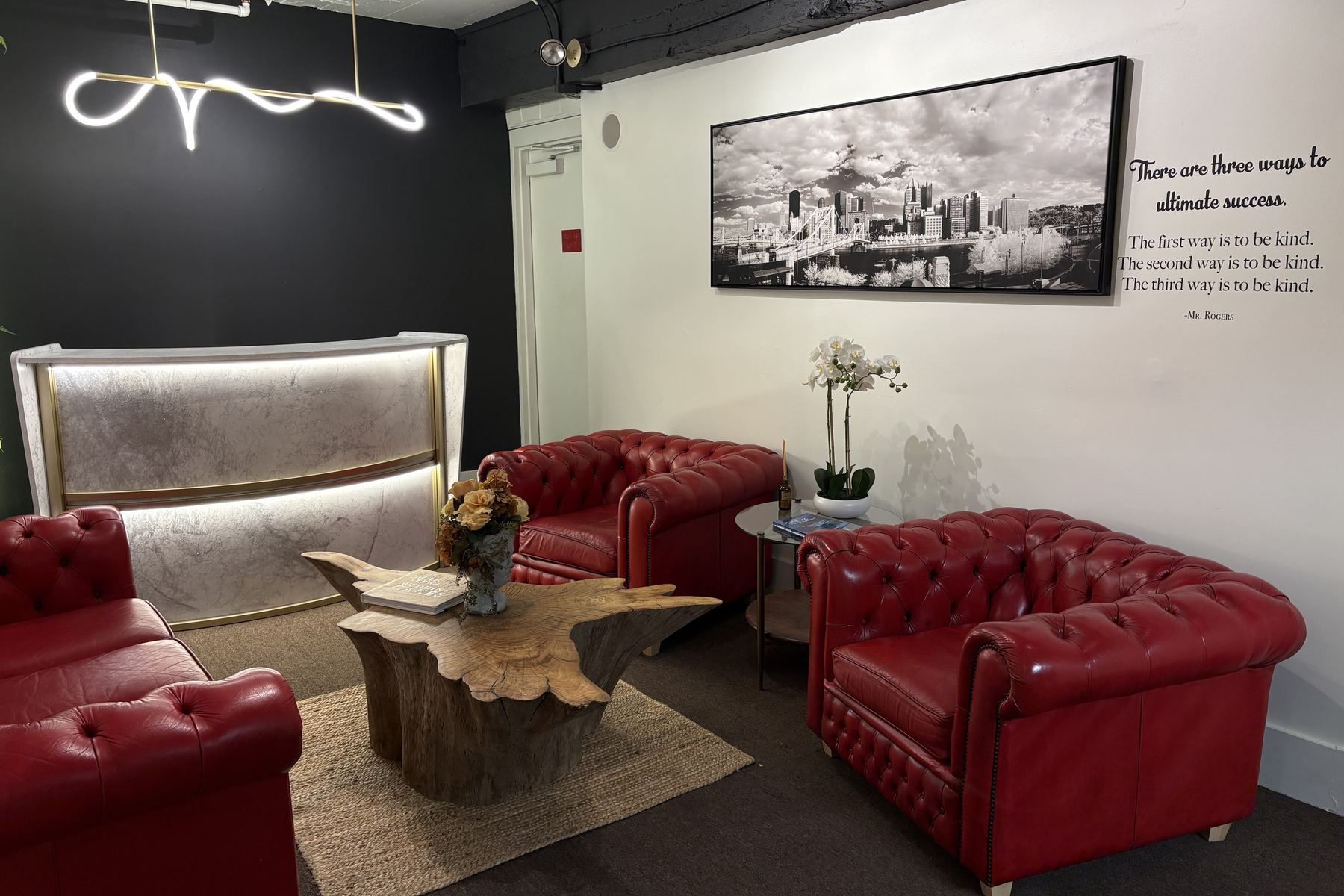
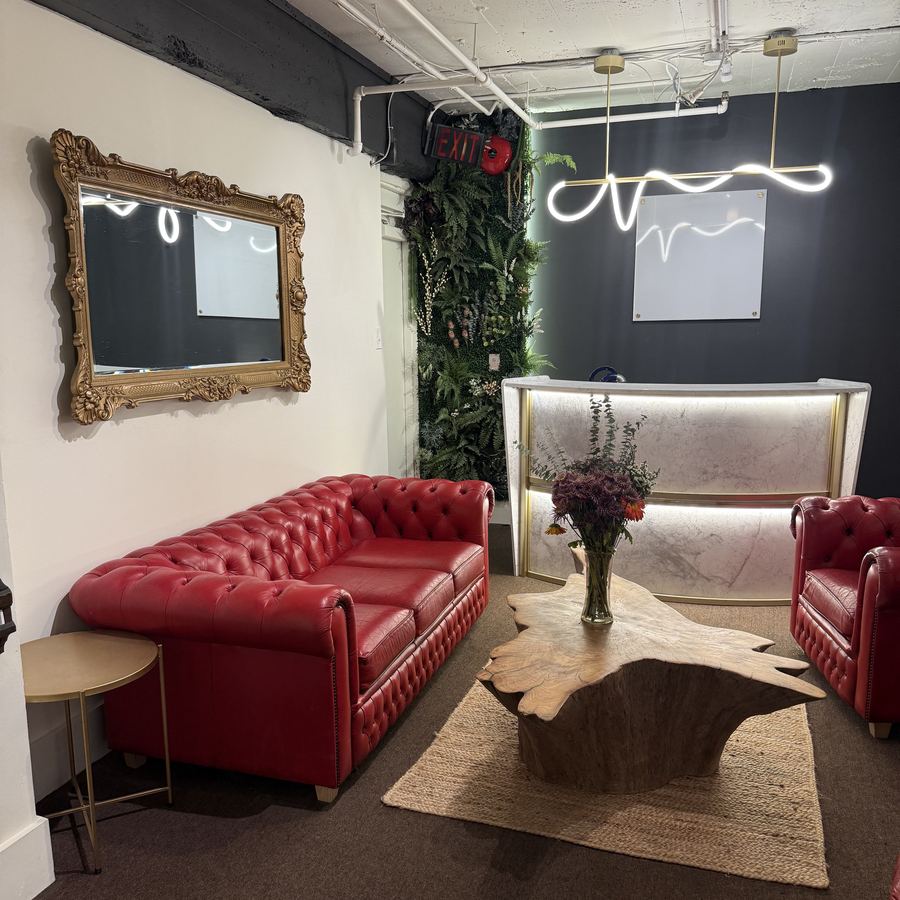
Pittsburgh Float Spa brings together time-tested wellness practices and thoughtfully selected recovery technology within a carefully curated, one-of-a-kind space. Every detail has been handpicked and intentionally designed to create an atmosphere of deep comfort, privacy, and restoration.

Try it before you commit to anything. Both are for first-time guests.
Three floats that build: a 35-minute float, then 60, then a full 90. Starting short and working up lets you ease into a longer float.
See intro pricingAll three within 30 days of your first float. One per customer.
Take a quarter off the first month of any float or sauna membership. Mention this offer when you book or at check-in.
Compare membershipsOffer ends 9/30.
Not sure which fits? Read what to expect on your first visit, or call us at 412.337.9882.
A set amount of service value each month to spend however you like — floats, sauna, massage. Whatever you don’t use rolls into next month.
Start a habit
$161 of services every month, plus 20% off everything else.
Where most people land
$284 of services every month, 30% off everything, and a guest each visit.
Make it your place
$506 of services every month, 35% off, and guests can come without you.
Swipe to compare — three tiers
Every tier: unused value rolls over month to month · spend it on floats, sauna or massage · 3-month commitment
Float • Infrared sauna • Massage • Wellness services
A float tank — also called a sensory deprivation or isolation tank — is a private, light- and sound-proof space built around a shallow pool of water made dense with about 1,500 lbs of pharmaceutical-grade Epsom salt. The water is held at skin temperature, so once you settle and stop moving, there is no temperature difference to feel and no weight on your body. With the light and sound gone too, you lose track of where the water ends and the air begins.
Floatation therapy was developed in the 1950s by physician and neuroscientist John C. Lilly, who wanted to study the mind free of outside stimulation. By the 1970s the modern float tank had been perfected, and it has been used ever since to help people rest, recover, and reconnect with themselves.
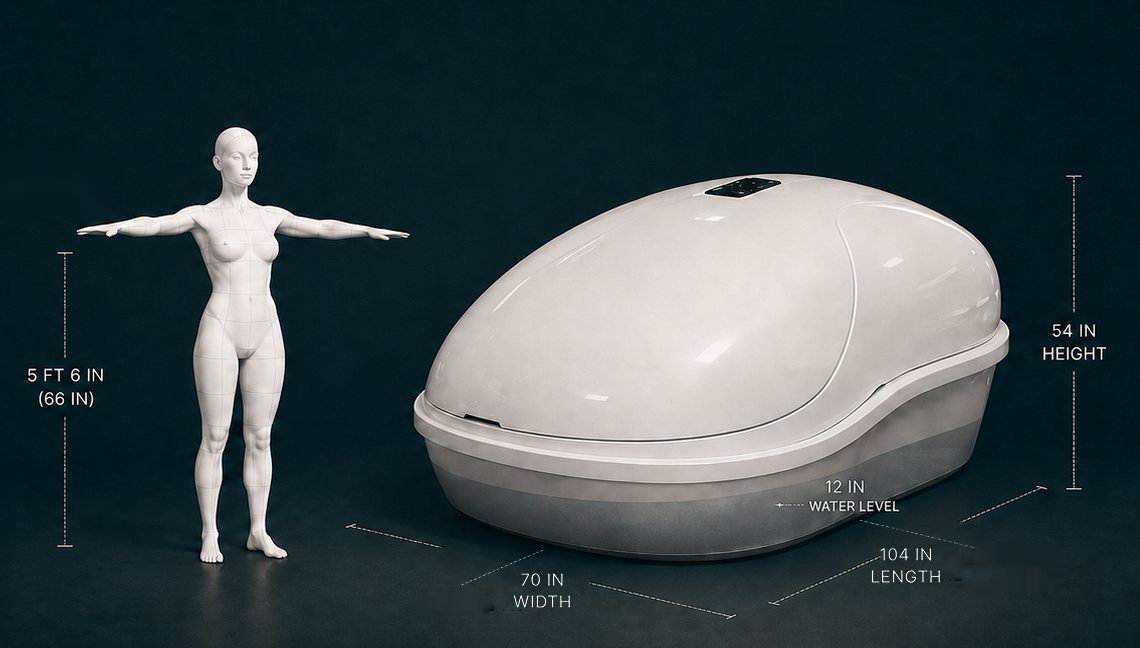
Every tank holds the same 12 inches of skin-temperature Epsom salt water, in purified, carefully maintained condition.
Room-like, walk-in comfort with space to stretch out and stand comfortably.
About the size of a king bed footprint, with full standing height. Room-like, walk-in comfort with space to stretch out and stand comfortably. Spacious enough for two and used for our couples floats, but equally suited for a solo session.
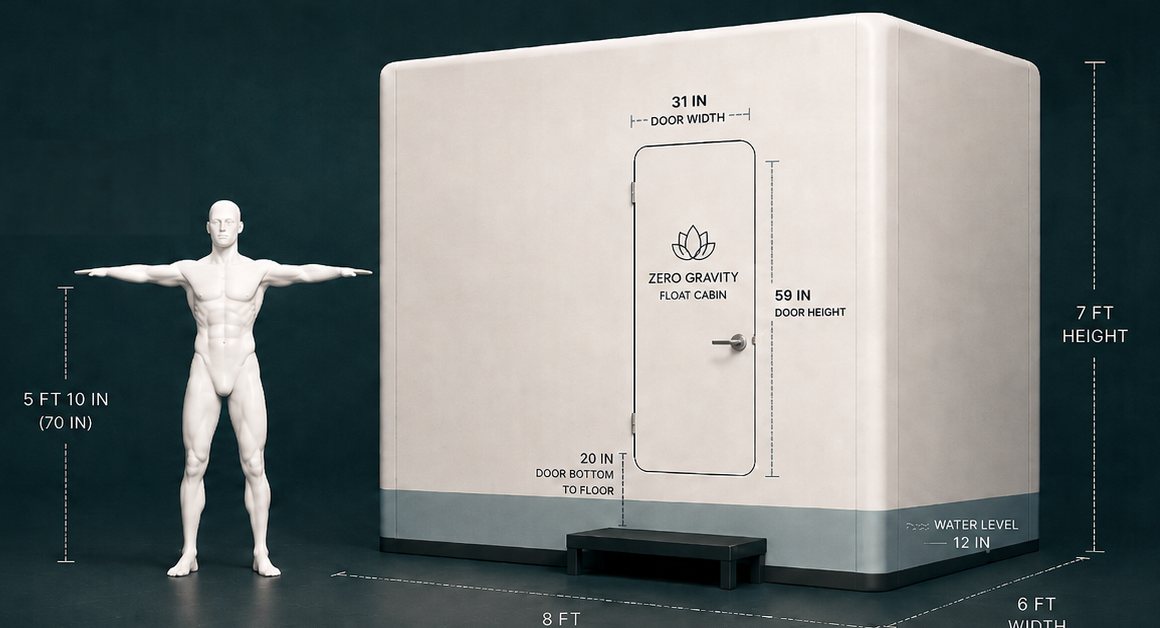
Enclosed comfort meets effortless floating for the deepest kind of relaxation.
Spacious and designed for solo floating comfort.
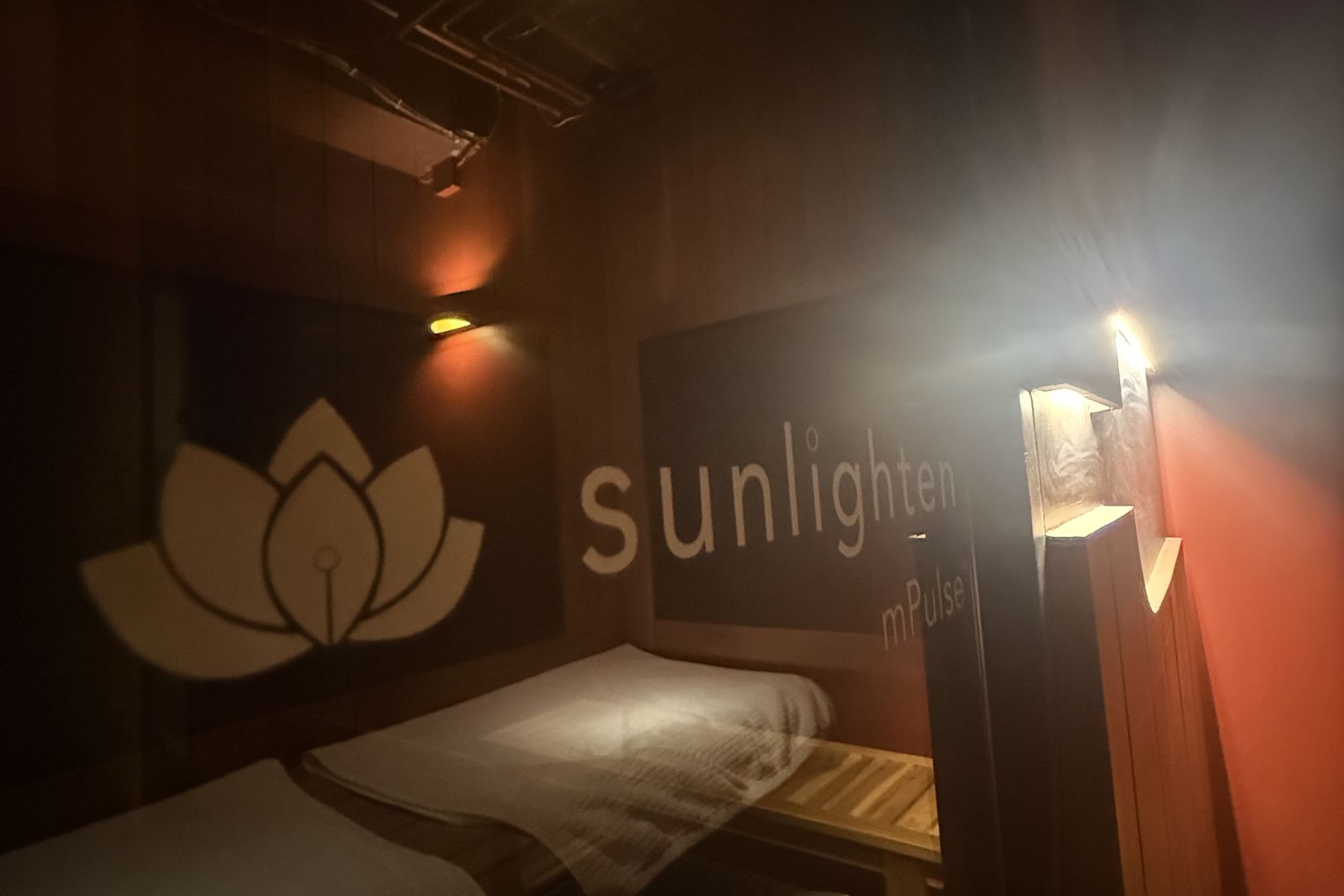
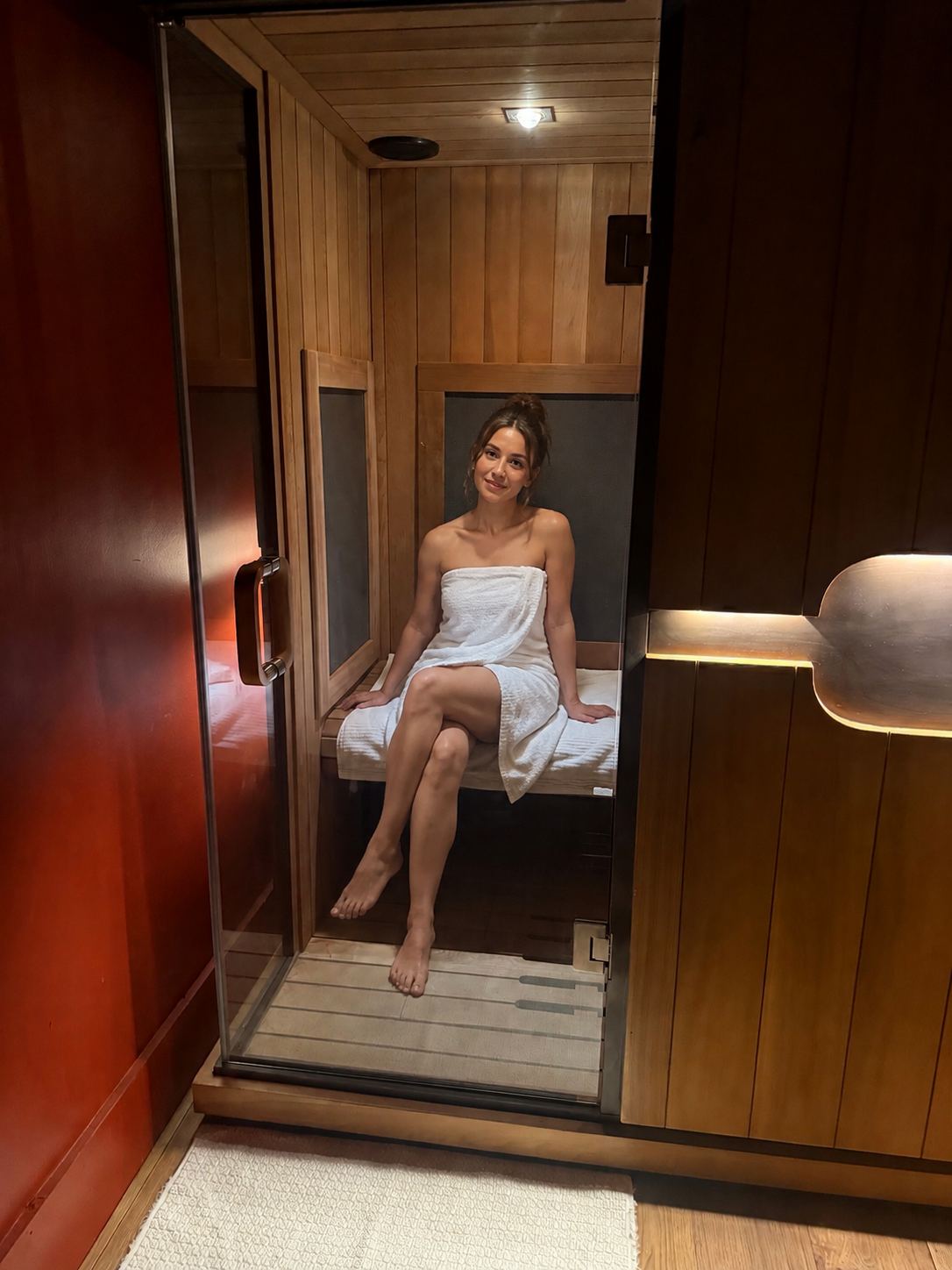
Our Sunlighten mPulse is a full-spectrum infrared sauna — near, mid, and far infrared in one cabin. Floating quiets the mind; the sauna works the other end, with deep heat that loosens tight muscles and gets circulation moving before or after your time in the tank.
Unlike a traditional sauna that heats the air around you, infrared warms your body directly. That means a deep, comfortable sweat at a lower ambient temperature — easier to sit in, and easier to stay in. Full spectrum means you get all three wavelengths rather than just one.
Most people use it as a warm-up before floating, when tight shoulders and a stiff back make it hard to settle. Others use it after, to stretch out the afterglow. Either works. Book it on its own, or pair it with a float.
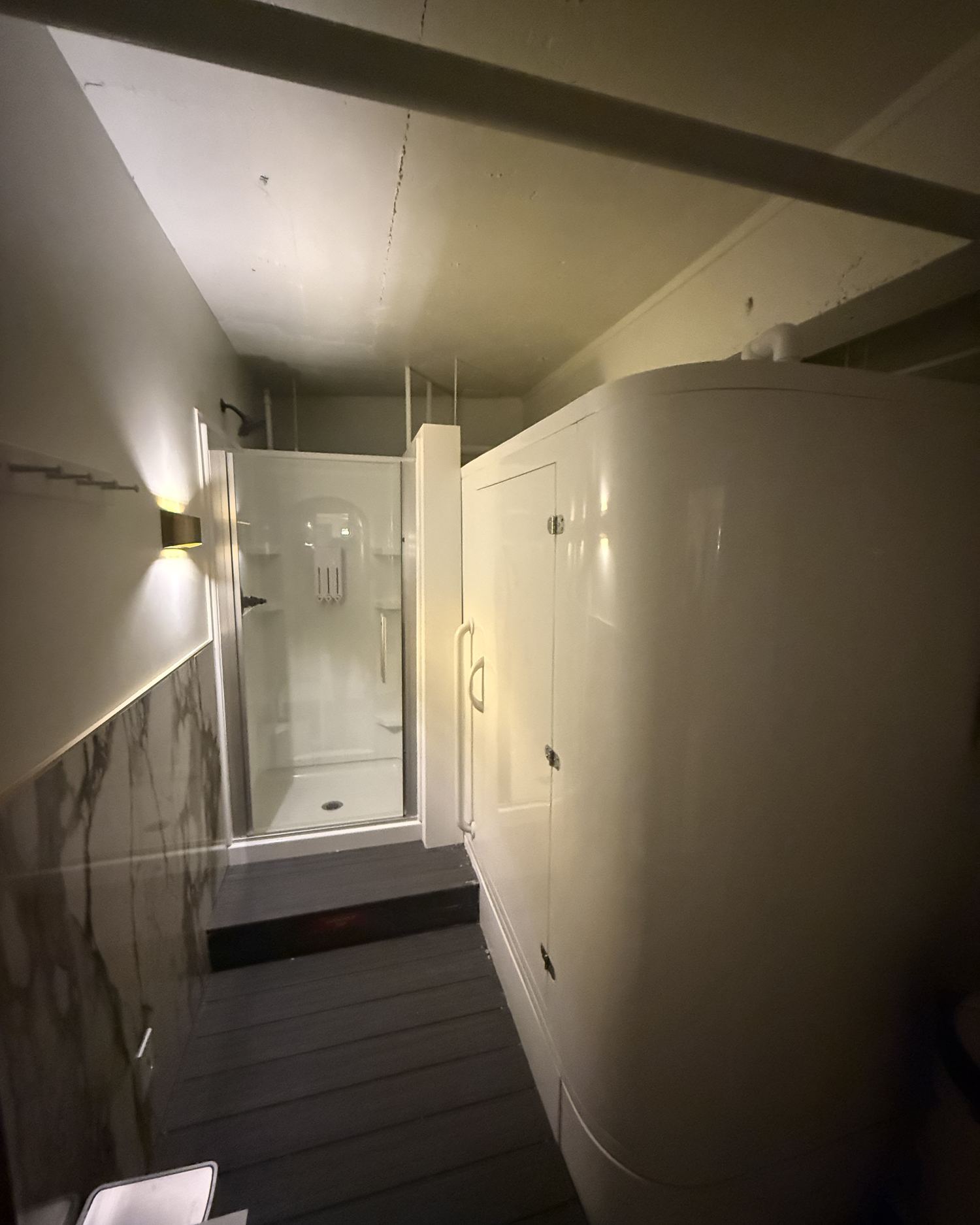
The cabin seats two comfortably and fits three, so it works just as well for a couple as it does on your own. It has its own shower too — not shared with the float suites — fitted with two shower heads as a couples shower, close enough to share.
Sauna sessions are included in our membership options, and can be added to any float booking.
Anxiety, depression, and chronic stress all share a common thread: a nervous system stuck in a state of alarm. Floating removes nearly every input that keeps it there — no light, no sound, no gravity, nothing to react to. For an hour, there is nothing to be on guard against.
In the tank, heart rate, blood pressure, and muscle tension drop measurably. People who spend their days braced often describe the first float as the first time in months their shoulders came all the way down.
Depression often comes with a loop of thought that’s hard to interrupt. Floating doesn’t argue with the loop — it removes the stimulation feeding it, and many people surface with a noticeably lighter mood.
Hypervigilance is exhausting. A private, controllable space where you decide the light, the sound, and when to open the door can be a way to practice being at rest. You are never locked in, and never out of control.
Poor sleep and stress compound each other. An hour of deep parasympathetic rest often carries into that night’s sleep, which is where a lot of the real recovery happens.
The most-cited work comes from the Float Clinic & Research Center at the Laureate Institute for Brain Research in Tulsa — the first lab dedicated to studying floating and mental health.
In a 2018 study published in PLOS ONE, fifty participants with anxiety and stress-related conditions — PTSD, generalized anxiety, panic disorder, agoraphobia, and social anxiety, most also experiencing depression — completed a single one-hour float. Researchers recorded a large reduction in state anxiety along with improvements in mood, serenity, and muscle tension. The effect showed up in every participant, regardless of diagnosis. Follow-up work has looked at how long those effects last, with some participants reporting benefits carrying into the next day or two.
It’s worth being straight about the limits: that study was open-label with no control group, and the field is still young. Floating is a promising tool for short-term relief, not a proven cure for anything.
Floating is not therapy, medication, or medical treatment, and we’re not clinicians. If you’re working with a therapist, psychiatrist, or doctor, keep working with them — and don’t change any prescription because of anything you read here. Plenty of our regulars float between sessions with their therapist and find the two work well together. Some mention it to their provider first, which is never a bad idea.
If you’re in crisis or thinking about harming yourself, please reach out to someone who can help right now — call or text 988 for the Suicide & Crisis Lifeline, any time, any day.
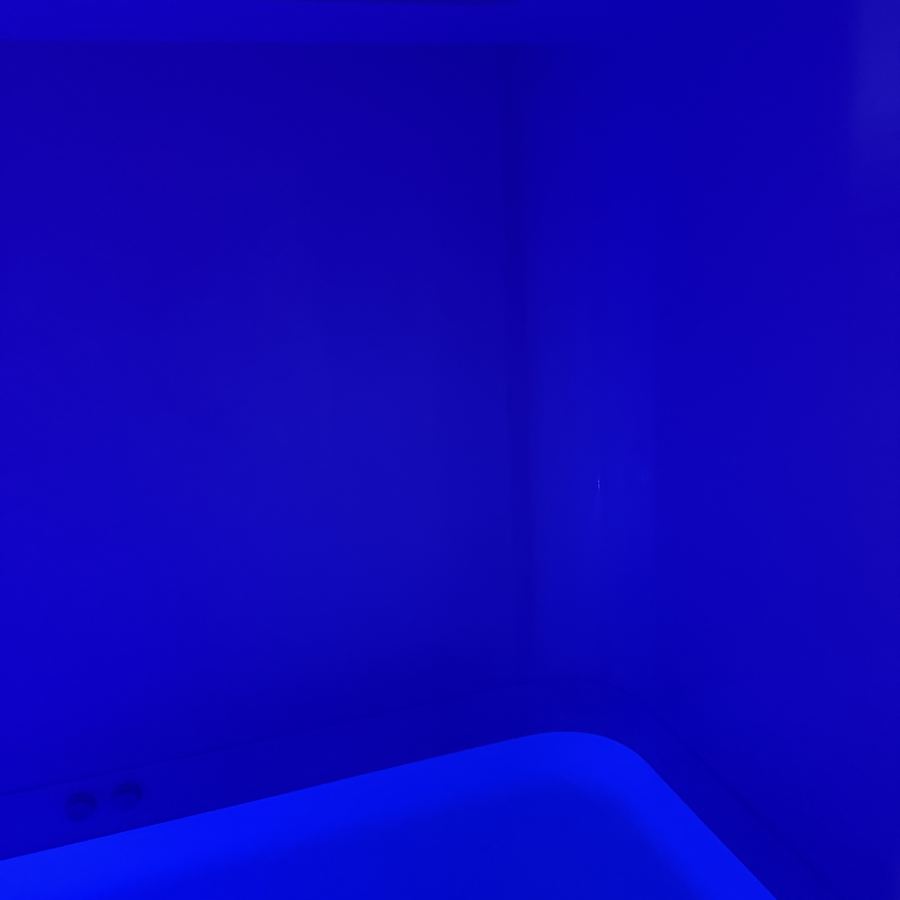
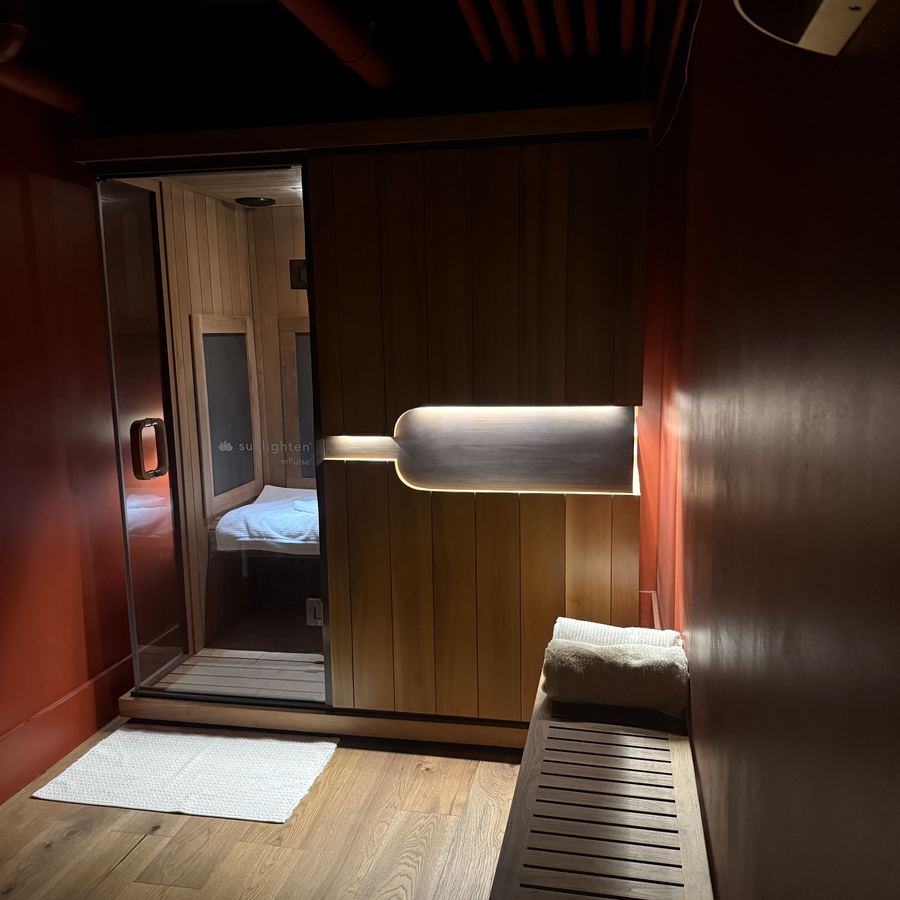
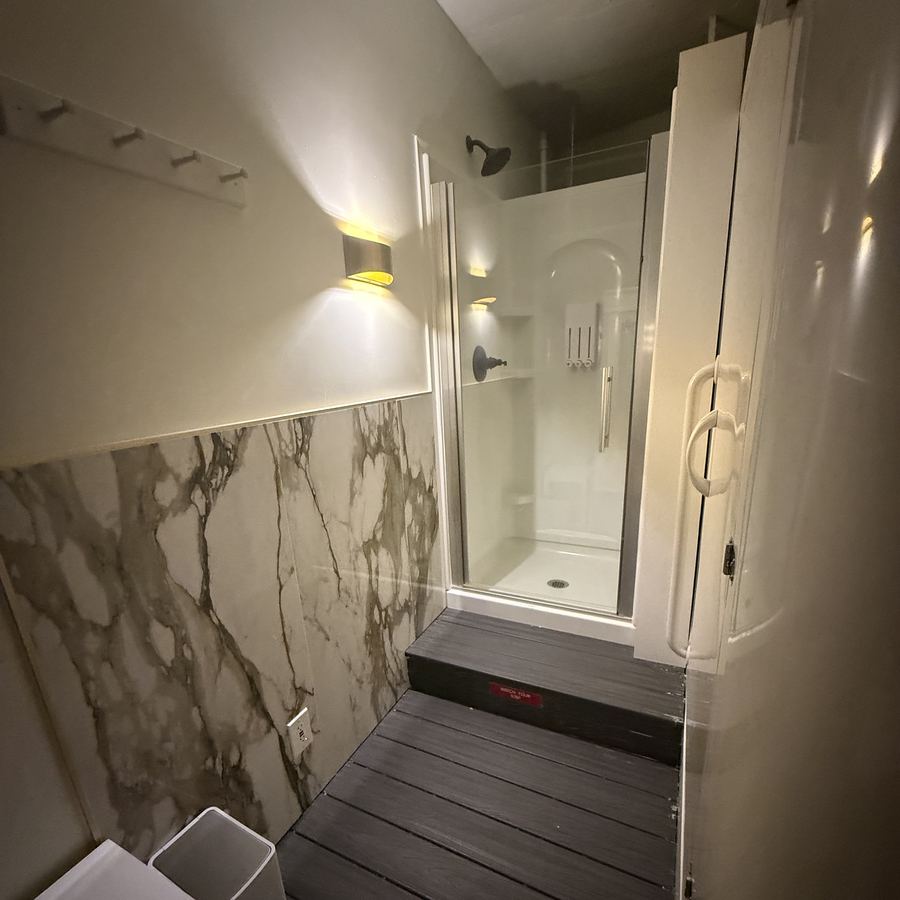
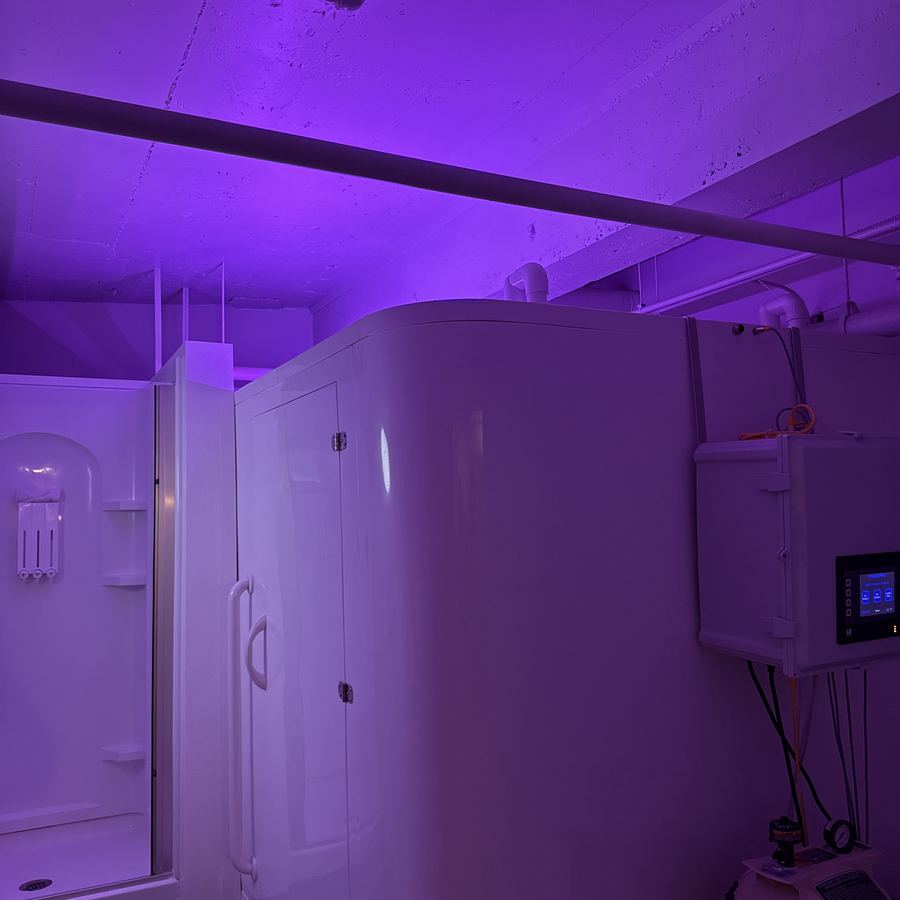
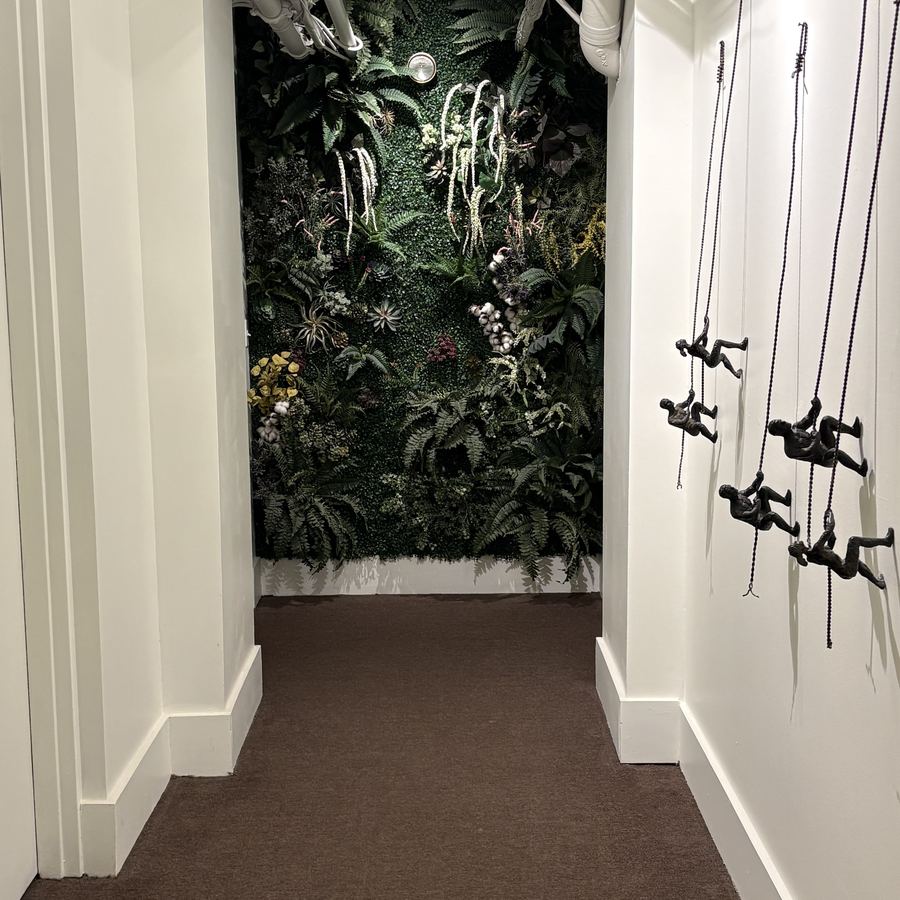
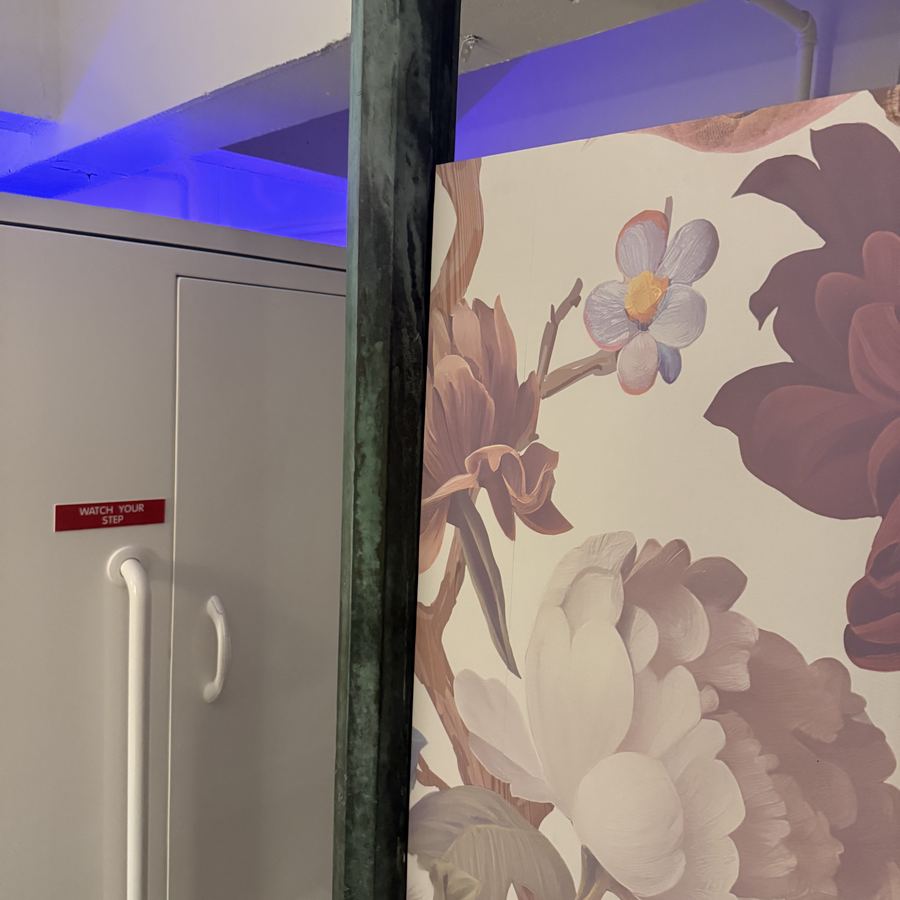
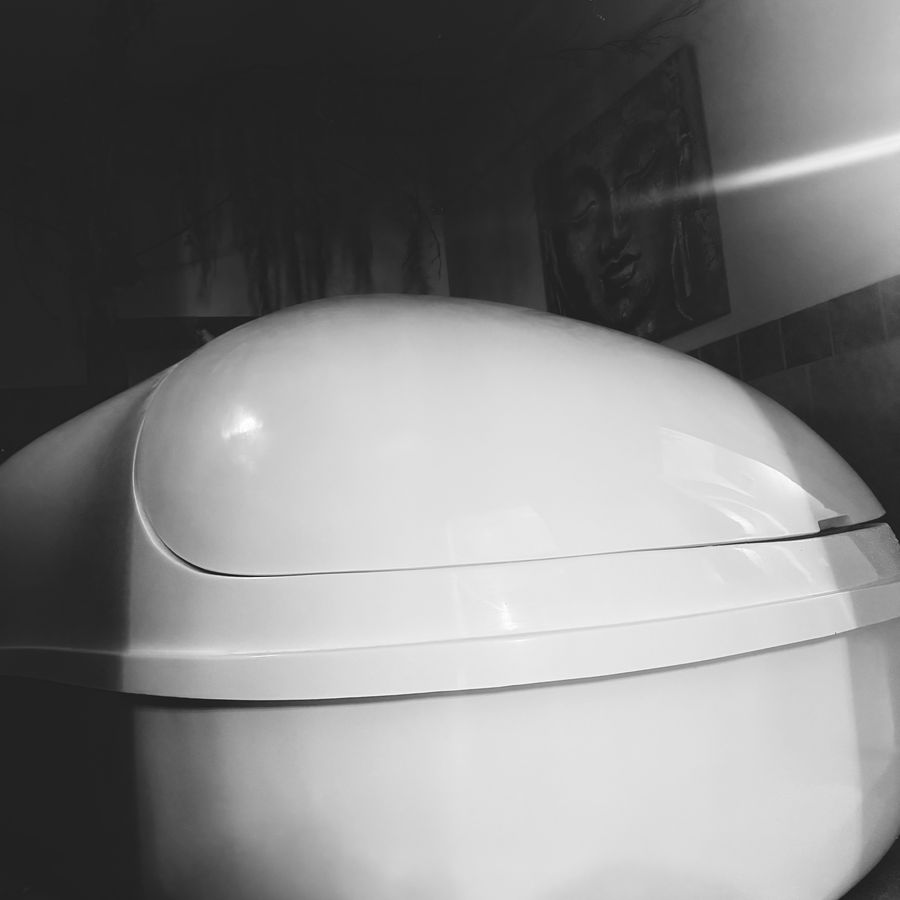
Everything worth knowing before you arrive — tap any section to open it.
Skip caffeine for a few hours, and avoid shaving or waxing beforehand — salt water stings freshly exposed skin. Fill out your waiver ahead of time if you can.
We provide towels, ear plugs, soap, shampoo, conditioner, and lotion. If you wear contacts, bring your own case and solution. You are welcome to bring your own products.
Start relaxing on the way in. You will shower before your float. We recommend floating nude, since clothing on the skin becomes a distraction. Every float room is fully private.
Lie back. Without gravity pulling on your muscles, your body stops holding itself up, and the line between water and air starts to disappear.
The light fades as your session begins, and one button brings it back any time. Float in silence, or use our underwater transducers for gentle sound. The door is always within reach.
A quick shower rinses the salt from your skin and hair. Take your time in the afterglow — many people feel the effects for days after a single float.
Our rooms are larger than a king bed with a seven-foot ceiling, so you can stand up inside. With the lights off, the space feels open rather than enclosed, and you can prop the door open at any time.
The salinity is too high for microorganisms to survive. Between every float the water is filtered and treated with UV light and ozone, and monitored continuously to stay pristine.
From a single session to a monthly practice. Live pricing and availability are pulled straight from our booking system below.
One session, flexible scheduling. The easiest way to try it for the first time.
Multi-float packages at a better rate per session. Best once you know you want to keep coming back.
Float or sauna every month as part of an ongoing routine, at member pricing.
Six float tanks and an infrared sauna make for a very different kind of team offsite, birthday or bachelorette. Book the whole spa for a group of up to 10–12 and give them an hour they’ll actually remember.
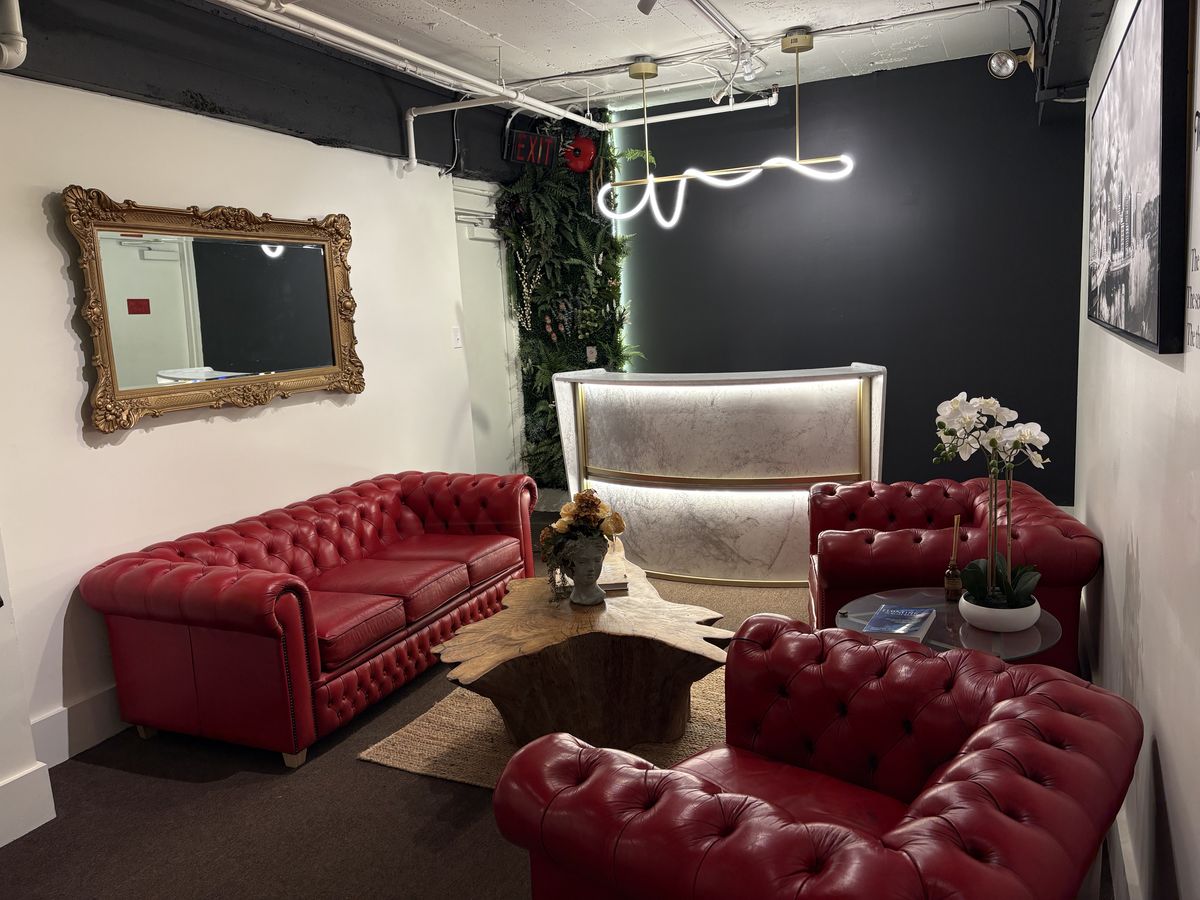
Most group bookings run one to two hours. Everyone floats, rotates through the sauna, and takes their time in the lounge afterward. We handle the schedule so nobody is standing around wondering what happens next.
Bring food, drinks, or decorations if you want to make an occasion of it. Tell us what you have in mind and we’ll build the timing around your group.
Fill out the form below with the basics — group size, a date you have in mind, and what the occasion is.
You’ll hear back within 24 hours with available times, pricing for your group size, and any add-ons that make sense.
A deposit holds your time. We take care of the rest — your group just shows up.
Tell us what you’re thinking. We reply within 24 hours, and there’s no commitment until you’re ready.

Luke Raymer is the founder of Pittsburgh Float Spa, a business that began rather unconventionally — with a Samadhi float tank in the living room and a hyperbaric oxygen chamber beside the bed of his second-floor Squirrel Hill apartment.
What started as a personal pursuit of health, recovery, and human performance has since evolved into a full-scale wellness spa in Pittsburgh’s Shadyside neighborhood.
— Luke, founder
Luke’s interest in health began long before Pittsburgh Float Spa. Always drawn to physical performance, movement, and understanding what the human body is capable of, his perspective changed significantly after being diagnosed with an autoimmune condition at 23. What followed was years of self-exploration, research, experimentation, and a growing appreciation for the body’s remarkable ability to adapt and recover.
Rather than looking for a single answer, Luke became interested in the fundamentals — movement, nutrition, recovery, stress, environment, and the often-overlooked practices that help the body function at its best. That curiosity led him to seek out teachers, practitioners, and experiences around the world.
While traveling to Toronto to train with renowned movement teacher Ido Portal, Luke booked his first float after hearing about sensory deprivation tanks but never having experienced one himself. He had injured his back only days before the trip and arrived unsure whether he would even be able to participate in the training.
The float changed that — and much more.
The combination of weightlessness, complete environmental stillness, physical relief, and the mental experience of floating opened a door to something Luke hadn’t encountered before. He left knowing he wanted access to that experience regularly.
There was just one problem: Pittsburgh didn’t have a float spa.
So he bought a tank.
Initially, there was no grand business plan. The tank went into his apartment, where Luke intended to use it himself and share the experience with friends and family. But as more people floated and he saw the impact it could have, the idea became much bigger. He eventually left his job, moved the tank into Shadyside, and Pittsburgh Float Spa was born.
More than a decade later, that original curiosity still shapes the business.
Luke personally approaches Pittsburgh Float Spa as both a wellness facility and a continually evolving environment — bringing together simple, time-tested practices like floating with carefully selected recovery tools and an intentionally designed space where people can genuinely disconnect.
His background in construction is evident throughout the spa. A builder and creator by nature, Luke has personally designed, built, sourced, and handpicked much of what surrounds the experience, from functional details to local and one-of-a-kind pieces. For him, the environment isn’t decoration; comfort, craftsmanship, atmosphere, and attention to detail are part of the experience.
That same curiosity extends well beyond the spa. When he isn’t buried in a project or working on the business, Luke is usually building something, exploring a new idea, spending time outdoors, or at home with his wife, two children, and an ever-growing assortment of farm animals.
At the center of it all is a fairly simple philosophy: stay curious, respect what the human body is capable of, spend time close to nature, keep creating — and don’t lose the sense of wonder that started the journey in the first place.
“In the province of the mind, what one believes to be true, either is true or becomes true.” John C. Lilly, who developed the first float tank
On Ellsworth Avenue in Shadyside. Book online any time, or call with questions.
You can pair a float with other wellness services in the same building — book with each provider directly.
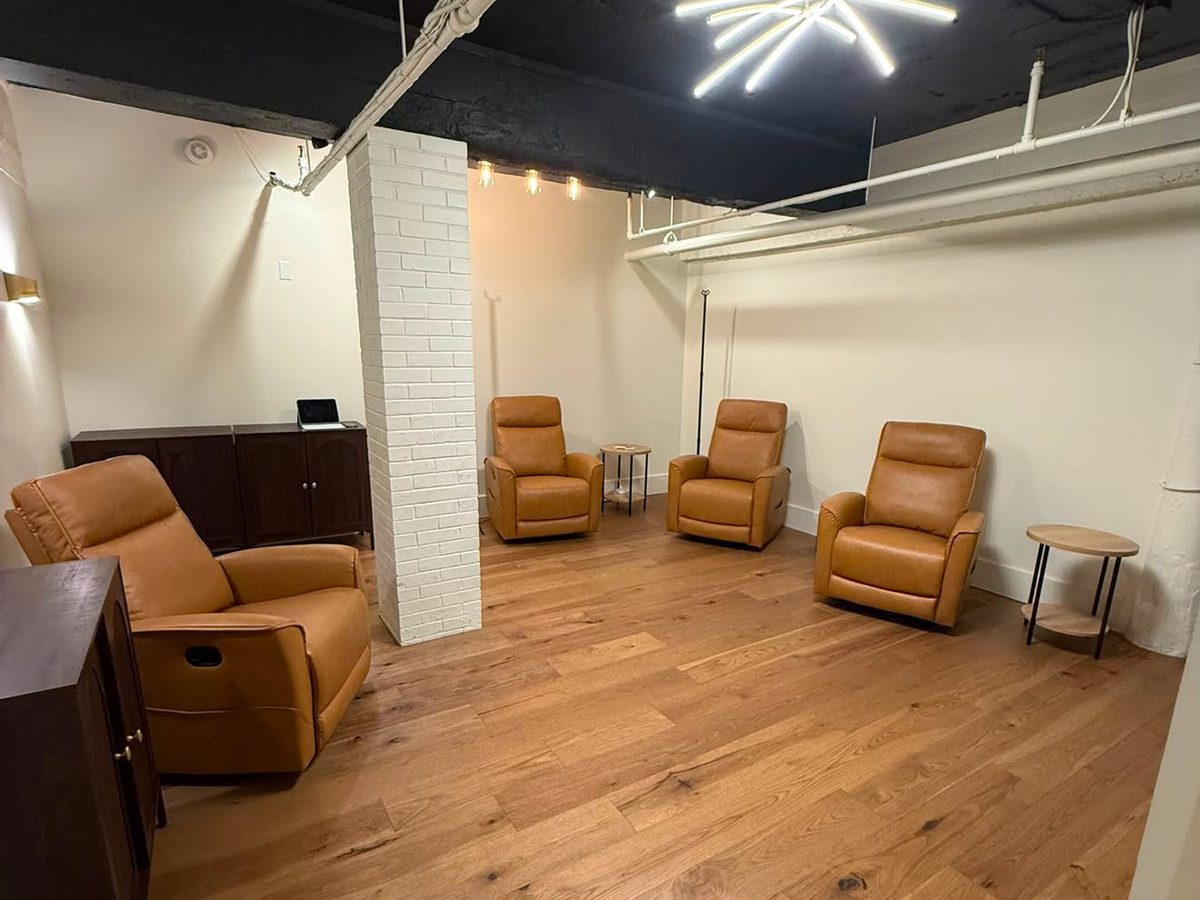
IV hydration and vitamin therapy, vitamin injections, and NAD+ treatments, with a LuVIP membership if you go regularly. Consultations are free — a good pairing with a float if you’re recovering from training or a hard week.
luviwellness.com →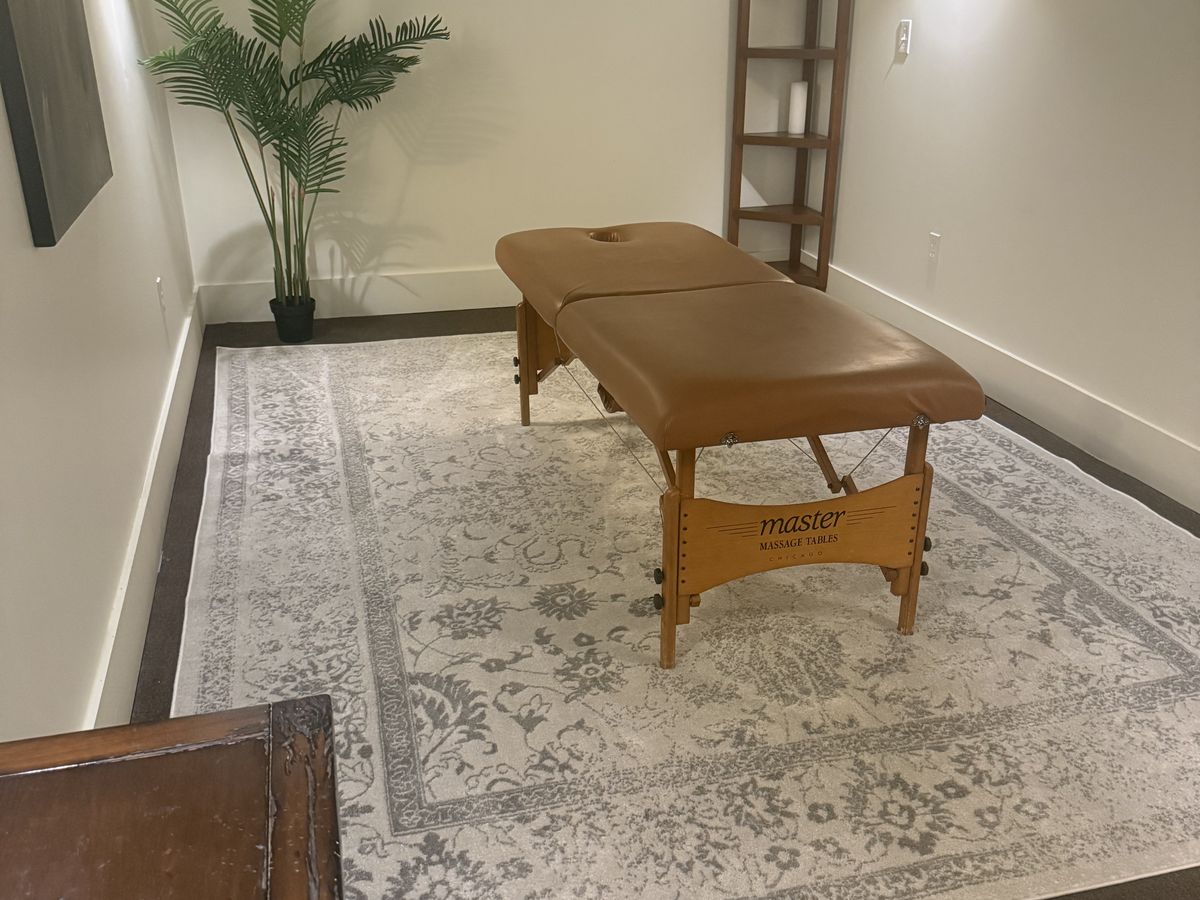
Licensed massage therapist working out of the spa.
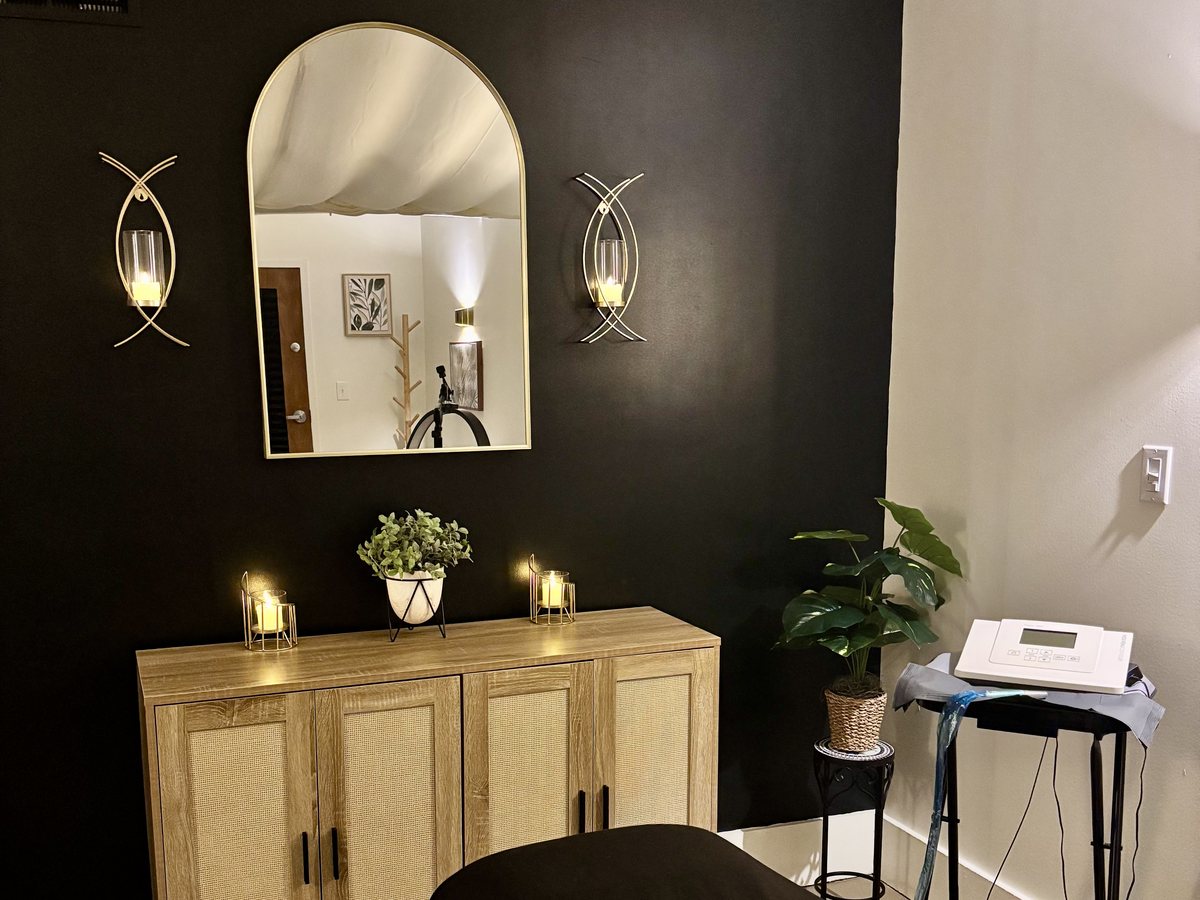
Microblading and permanent makeup with Angela Crist — nano and ombré brows, permanent eyeliner, lip blushing, scalp micropigmentation, and paramedical tattooing including scar camouflage and 3D areola work.
permanentlyperfectmakeup.com →Ring 1100 on the keypad and we’ll buzz you in, then take the elevator to the lower level.
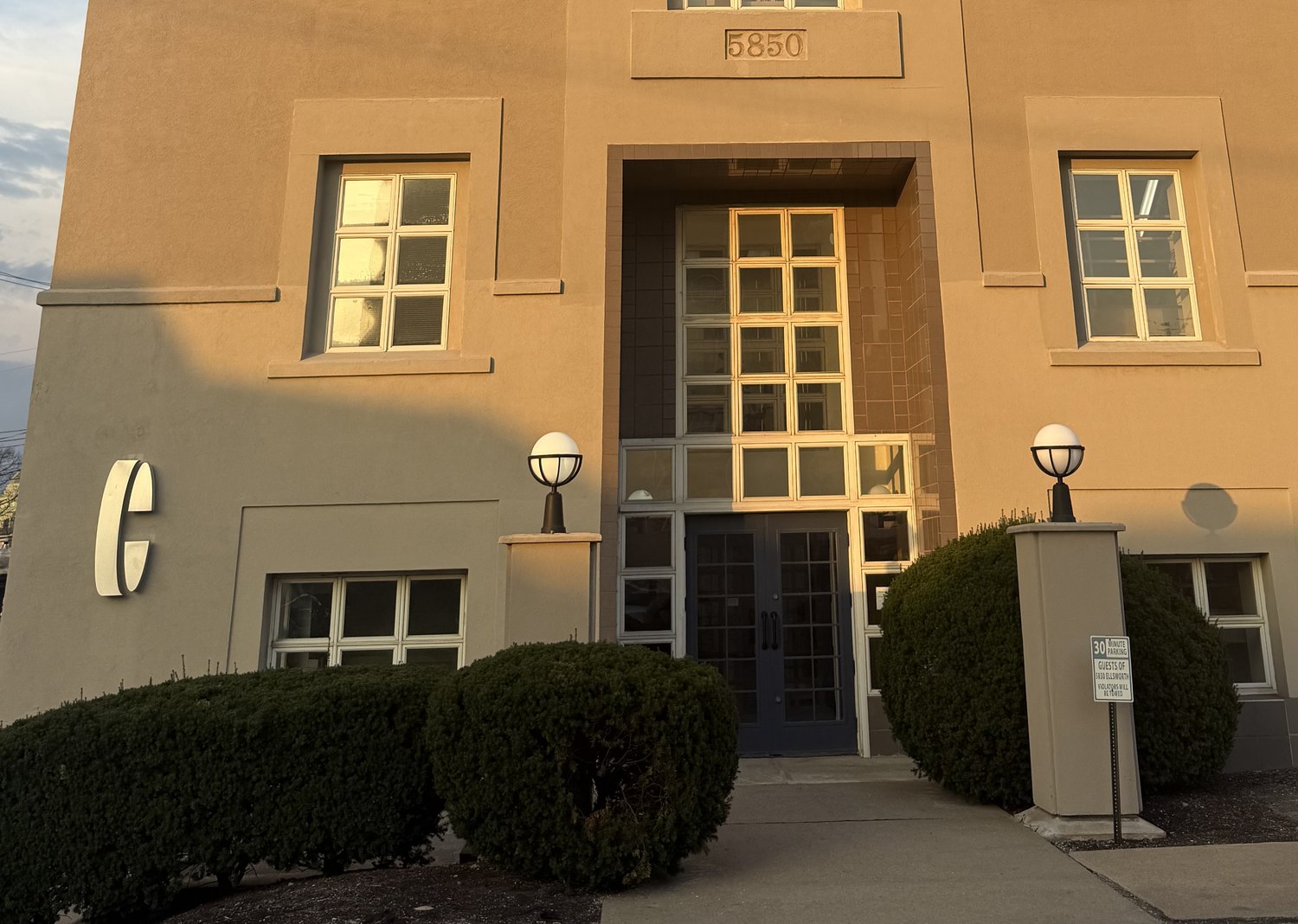
The entrance is on the Ellsworth Avenue side, just past the corner — follow the arrow. Ring 1100 on the keypad and we’ll buzz you in, then take the elevator down to the lower level.
Better sleep, less noise in your head, more room to think. One session and you will feel the difference.

Three floats for the price of one — 35 minutes, then 60, then a full 90 — so you can build up to a longer float.
Book my first float